My Career Path


 My Career Path

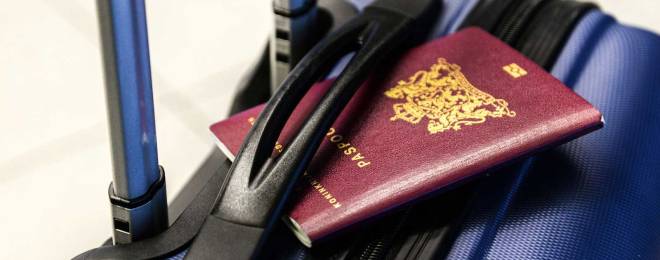
The Admission team is on hand to help you with administrative formalities, including obtaining your student visa.
What is your profile?
🇪🇺 You are a national of the EU, the EEA or Switzerland ✅ No visa required A valid identity card or passport is all you need to study in France. | 🌍 You come from a country outside the EU / EEA 📌 Long-stay “student” visa required For any period of study of more than 3 months. A tourist visa is not enough. |
- See the list of EU and EEA countries
The 27 member states of the European Union: Austria, Belgium, Bulgaria, Croatia, Cyprus, Czechia, Denmark, Estonia, Finland, France, Germany, Greece, Hungary, Ireland, Italy, Latvia, Lithuania, Luxembourg, Malta, the Netherlands, Poland, Portugal, Romania, Slovakia, Slovenia, Spain, Sweden.
European Economic Area (non-EU): Iceland, Liechtenstein, Norway. Also exempt from the visa requirement: Switzerland.
- Special case: I am a non-European national living in the EU
Do you hold a non-EU nationality but have a residence permit for an EU country, and are coming to Excelia on an exchange for more than 3 months? You must apply for a study visa for France at the French consulate in your country of residence.
🪪 For all students: photo ID is compulsory. An identity card is accepted, but we recommend that you bring your passport.
Your visa in 3 steps
This process applies to students coming from a country outside the EU / EEA.
1 | Enrol at ExceliaStart by completing your enrolment at the School: you will receive a pre-enrolment certificate, which is essential for your visa application. We strongly recommend that you enrol before starting the Campus France procedures. |
2 | Apply for your visa in your home countrySubmit your long-stay “student” visa application to the French embassy or consulate nearest to where you live. ❗ It is impossible to obtain a student visa once you have arrived in France. All procedures must be completed from your home country. If your country is one of the 67 countries that use the Études en France procedure, your application goes through the Campus France portal. |
3 | Validate your visa online on arrivalYou have 3 months (90 days) after arriving in France, whatever the expiry date shown on your visa, to validate it on the ANEF portal. This validation gives your visa the value of a residence permit. |
Is my country covered by Études en France? →
🔁 Exchange or double-degree student?
If you are coming under a bilateral agreement, log in to the Études en France portal, click “Je suis accepté (échange/double diplôme)” (“I have been accepted (exchange/double degree)”) at the top of the page, then select “étudiant en échange/double diplôme” (“exchange/double-degree student”).
Validating your visa: what you need
Have these 4 items ready before logging in to the ANEF portal:
- ✅ the details shown on your visa;
- ✅ your date of entry into France;
- ✅ your residential address in France;
- ✅ a €50 tax stamp (timbre fiscal), available from a tobacconist (bureau de tabac) or directly online on the ANEF portal.
Validate my visa on the ANEF portal →
Is your course longer than a year? Apply for your residence permit 2 to 3 months before your visa expires (at the end of your first year), on the same portal. The International Office will help you with this process.
Insurance and banking: your other procedures
- Health insurance: to arrange before you leave
- 4 months or less: take out health insurance in your home country that is valid in France.
- More than 4 months, EU student: apply for your European Health Insurance Card (EHIC/CEAM) at least 4 weeks before you leave.
- More than 4 months, non-European student: you will register free of charge with the French social security system (Sécurité sociale) when you arrive.
🩺 Remember to have a health check-up and see a dentist before you leave.
- Social security, top-up insurance and other cover: on arrival
- Social security (non-European students): free of charge. You receive a number, then a Carte Vitale (health insurance card). It reimburses 65% of your healthcare costs.
- Top-up health insurance (mutuelle): it covers the remaining 35%, from around €5 a month. Strongly recommended, as the basic level of cover reimburses hospital stays at 100%. Our partner SMERRA holds drop-in sessions at the start of the academic year.
- Third-party liability insurance (responsabilité civile): compulsory for everyone, around €80 a year. Home contents and buildings insurance (assurance habitation) is also compulsory if you rent. Ask your bank, or compare insurers.
- Opening a bank account
Essential if you are staying for more than a few months. Stands with a partner bank are set up at the start of each semester. The main banks (BNP Paribas, Crédit Mutuel, Crédit Agricole, Société Générale, LCL) welcome international students.
Documents to provide:
- a copy of your passport;
- proof of address in France (tenancy agreement or accommodation certificate);
- an Excelia certificate of enrolment, available in WebGaia: Mon compte > Mon dossier administratif > Certificat de scolarité (My account > My administrative file > Enrolment certificate).
Frequently asked questions
- Can I arrive on a tourist visa and change my status in France?
No. A tourist visa does not allow you to follow a long-term course of study, and it is impossible to obtain a “student” visa once you have arrived in France. Your application must be made from your country of residence.
- When should I start my visa application?
As soon as your enrolment at Excelia is confirmed: the pre-enrolment certificate issued by the School is required to submit your application to the French embassy or consulate.
- How long do I have to validate my visa in France?
You have 3 months (90 days) after arriving in France. Validation is done online on the ANEF portal and requires a €50 tax stamp.
- Do I need top-up health insurance?
Social security reimburses 65% of your healthcare costs. Top-up insurance (mutuelle), from around €5 a month, covers the remaining 35%. We strongly recommend it to non-European students, in particular to be reimbursed at 100% in the event of hospitalisation.
Everything you need to know about visas (Campus France) →
Any questions? Two teams are here to help
International Admissions Before you arrive: application file, international entrance exam, visa application. | International Office Once you are enrolled: accommodation, residence permit, social security, banking. |